
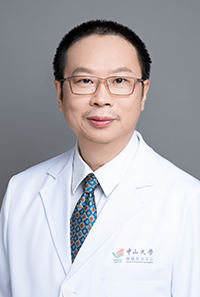
- Name: Zhi-Wei Zhou
- Title: Professor and Chief Physician
- Email: zhouzhw@sysucc.org.cn
- Phone:
Professor Zhou is a distinguished Professorin the Department of Gastric Surgery at the Sun Yat-sen University Cancer Center (SYSUCC). He earned his Bachelor of Medicine in 1984 and his Ph.D. in 2007 from Sun Yat-sen University of Medical Sciences, People's Republic of China. His medical training began with residency at the China-Japan Friendship Hospital in Beijing in 1984, followed by specialized residency training in the Department of Abdominal Surgery at SYSUCC from 1986 to 1991. Professor Zhou ascended through the ranks at SYSUCC, being promoted to Attending Surgeon in 1991, Associate Professor in 1998, and Professor in 2004.
With over 30 years of clinical experience, Professor Zhou has developed extensive expertise in the diagnosis, treatment, and management of a wide range of abdominal malignancies, including gastric cancer, retroperitoneal tumors, neuroendocrine tumors, gastrointestinal tumors, and melanoma. He is particularly renowned for his specialized surgical approaches to gastric cancer.
In 2009, Professor Zhou was appointed as the Director of the Department of Gastric Surgery at SYSUCC. His leadership extends beyond the clinical setting; he has served in numerous prominent academic roles, including President of the Gastric Cancer Specialty Committee of the Guangdong Provincial Anti-cancer Association (2013-2017) and Vice-President of the Gastric Cancer Expert Committee of the Chinese Society of Clinical Oncology from 2017 to the present.
1. Neoadjuvant chemotherapy for advanced gastric cancer: Conduct both basic and clinical research (including prospective randomized controlled clinical trials) on neoadjuvant chemotherapy for advanced gastric cancer, propose effective regimens of neoadjuvant chemotherapy and immunotherapy for advanced gastric cancer.
2. Chemoradiation for locally advanced gastric cancer: Conduct both basic and clinical research on the chemoradiation for locally advanced gastric cancer.
Doctor of Philosophy (Ph.D.) in Surgical Oncology from the Sun Yat-sen University (Guangzhou, P. R. China), 2007.
Post Graduate Training in General Surgery, Royal Adelaide Hospital (Adelaide, Australia), 2003.
Master’s in medicine from the Sun Yat-sen University of Medical Sciences (Guangzhou, P. R. China), 1999.
Bachelor of Medicine from the Sun Yat-sen University of Medical Sciences (Guangzhou, P. R. China), 1984.1. Wang W, Yang YJ, Zhang RH, Deng JY, Sun Z, Seeruttun SR, Wang ZN, Xu HM, Liang H,Zhou ZW. Standardizing the classification of gastric cancer patients with limited and adequate number of retrieved lymph nodes: an externally validated approach using real-world data.Mil Med Res.2022 Apr 7;9(1):15.
2. Wang W, Peng Y, Feng X, Zhao Y, Seeruttun SR, Zhang J, Cheng Z, Li Y, Liu Z,Zhou Z. Development and Validation of a Computed Tomography-Based Radiomics Signature to Predict Response to Neoadjuvant Chemotherapy for Locally Advanced Gastric Cancer.JAMA Netw Open.2021;4(8):e2121143.
3. Seeruttun SR, Xu L, Wang F, Yi X, Fang C, Liu Z, Wang W,Zhou Z. A homogenized approach to classify advanced gastric cancer patients with limited and adequate number of pathologically examined lymph nodes. Cancer Commun. 2019;39(1):32.
4. Yuan SQ, Nie RC, Jin Y, Liang CC, Li YF, Jian R, Sun XW, Chen YB, Guan WL, Wang ZX, Qiu HB, Wang W, Chen S, Zhang DS, Ling YH, Xi SY, Cai MY, Huang CY, Yang QX, Liu ZM, Guan YX, Chen YM, Li JB, Tang XW, Peng JS,Zhou ZW, Xu RH, Wang F. Perioperative toripalimab and chemotherapy in locally advanced gastric or gastro-esophageal junction cancer: a randomized phase 2 trial.Nat Med. 2024 Feb;30(2):552-559.
5. Yuan SQ, Nie RC, Huang YS, Chen YB, Wang SY, Sun XW, Li YF, Liu ZK, Chen YX, Yao YC, Xu Y, Qiu HB, Liang Y, Wang W, Liu ZX, Zhao Q, Xu RH,Zhou ZW, Wang F. Residual circulating tumor DNA after adjuvant chemotherapy effectively predicts recurrence of stage II-III gastric cancer.Cancer Commun. 2023 Dec;43(12):1312-1325.
6. Zheng ZQ, Zhong CR, Wei CZ, Chen XJ, Chen GM, Nie RC, Chen ZW, Zhang FY, Li YF,Zhou ZW, Chen YM, Liang YL. Hyperactivation of mTOR/eIF4E Signaling Pathway Promotes the Production of Tryptophan-To-Phenylalanine Substitutants in EBV-Positive Gastric Cancer.Adv Sci. 2024 Sep;11(35):e2402284.
7. Nie RC, Chen FP, Yuan SQ, Luo YS, Chen S, Chen YM, Chen XJ, Chen YB, Li YF,Zhou ZW. Evaluation of objective response, disease control and progression-free survival as surrogate end-points for overall survival in anti-programmed death-1 and anti-programmed death ligand 1 trials.Eur J Cancer. 2019;106:1-11.
8. Nie RC, Yuan SQ, Ding Y, Chen YM, Li YF, Liang CC, Cai MY, Chen GM, Wang W, Sun XW, Weng DS, Li DD, Zhao JJ, Chen XJ, Guan YX, Liu ZM, Liang Y, Luo M, Chi J, Qiu HB,Zhou ZW, Zhang XS, Chen YB. Perioperative tislelizumab plus chemotherapy for locally advanced gastroesophageal junction adenocarcinoma (NEOSUMMIT-03): a prospective, nonrandomized, open-label, phase 2 trial.Signal Transduct Target Ther. 2025 Feb 5;10(1):60.
9. Wang W, Sun Z, Deng JY, Qi XL, Feng XY, Fang C, Ma XH, Wang ZN, Liang H, Xu HM,Zhou ZW. A novel nomogram individually predicting disease-specific survival after D2 gastrectomy for advanced gastric cancer. Cancer Commun. 2018;38(1):23.